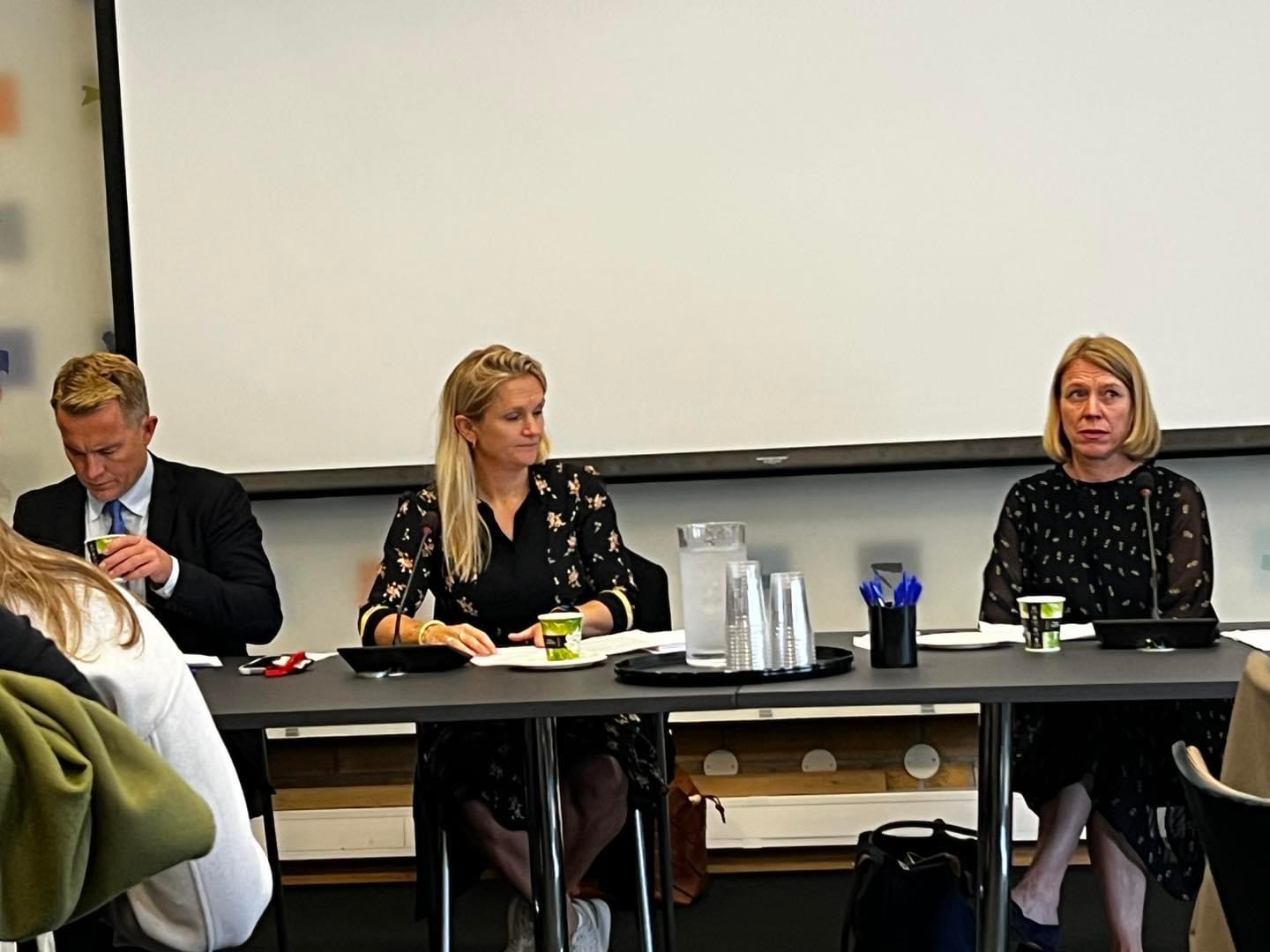
Adiljan Abdurihim, Coordinator for Uyghur Transitional Justice Database presented a session “Documenting Human Rights Abuses and Advancing Corporate Due Diligence: Lessons from East Turkistan” as part of the IHRB Masters Course in Business and Human Rights, jointly offered by the Institute for Human Rights and Business (IHRB), the University of Bergen, and the Rafto Foundation for Human Rights.
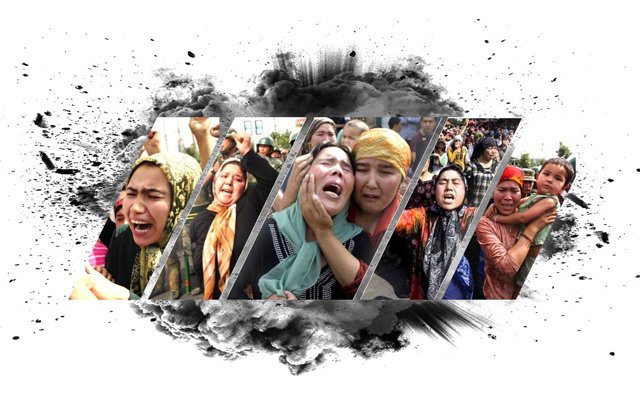
During the session, Adiljan introduced the work of the Uyghur Transitional Justice Database (UTJD) in documenting human rights violations against Uyghurs and other Turkic peoples in East Turkistan. We explored how survivor testimonies, open-source intelligence, leaked documents, satellite imagery, and other forms of evidence can help document arbitrary detention, internment facilities, and forced labour—even when independent access to the region is severely restricted.
A central theme was the connection between human rights documentation and corporate accountability. Forced labour risks do not necessarily end at a factory gate or remain within one region. Raw materials and products can pass through multiple suppliers, processors, and countries, making it difficult for companies to identify the origins of their goods. We discussed why conventional social audits may be insufficient in highly restrictive environments, where workers may be unable to speak freely and independent investigations face serious obstacles.
Several important lessons emerged from the discussion:
- Due diligence must go beyond paperwork. Policies, supplier declarations, and audit reports are not enough when the conditions required for independent verification are absent.
- Evidence matters. Combining testimonies, satellite imagery, public records, and other sources can help identify risks and build a stronger picture of abuses that would otherwise remain hidden.
- Supply chains must be examined beyond direct suppliers. Companies need to consider indirect sourcing, processing, and transshipment, rather than relying solely on the country of origin listed on a finished product.
- Transparency is essential, but can be difficult to achieve. In restrictive environments, gathering reliable information can expose researchers, workers, and other sources to significant risks.
- Corporate responsibility requires meaningful action. Human rights due diligence should help companies identify, prevent, mitigate, and address adverse impacts—not simply demonstrate formal compliance.
We would like to express our sincere thanks to the IHRB, the University of Bergen, and the Rafto Foundation for Human Rights for organising the Masters Course and providing a platform for these important discussions. We are equally grateful to the participants for their engagement, thoughtful questions, and willingness to examine the difficult practical challenges of advancing human rights in global business.
For UTJD, documenting abuses is not only about preserving evidence of what has happened. It is also about helping ensure that evidence can inform research, accountability, and better decisions by companies and institutions. We hope the session encouraged participants to look beyond formal compliance and consider what meaningful human rights due diligence requires when the risks are severe and the evidence is difficult to obtain.
“Human rights due diligence must be more than a box-ticking exercise. When independent verification is difficult, the responsibility to investigate does not disappear—it becomes even more important.”