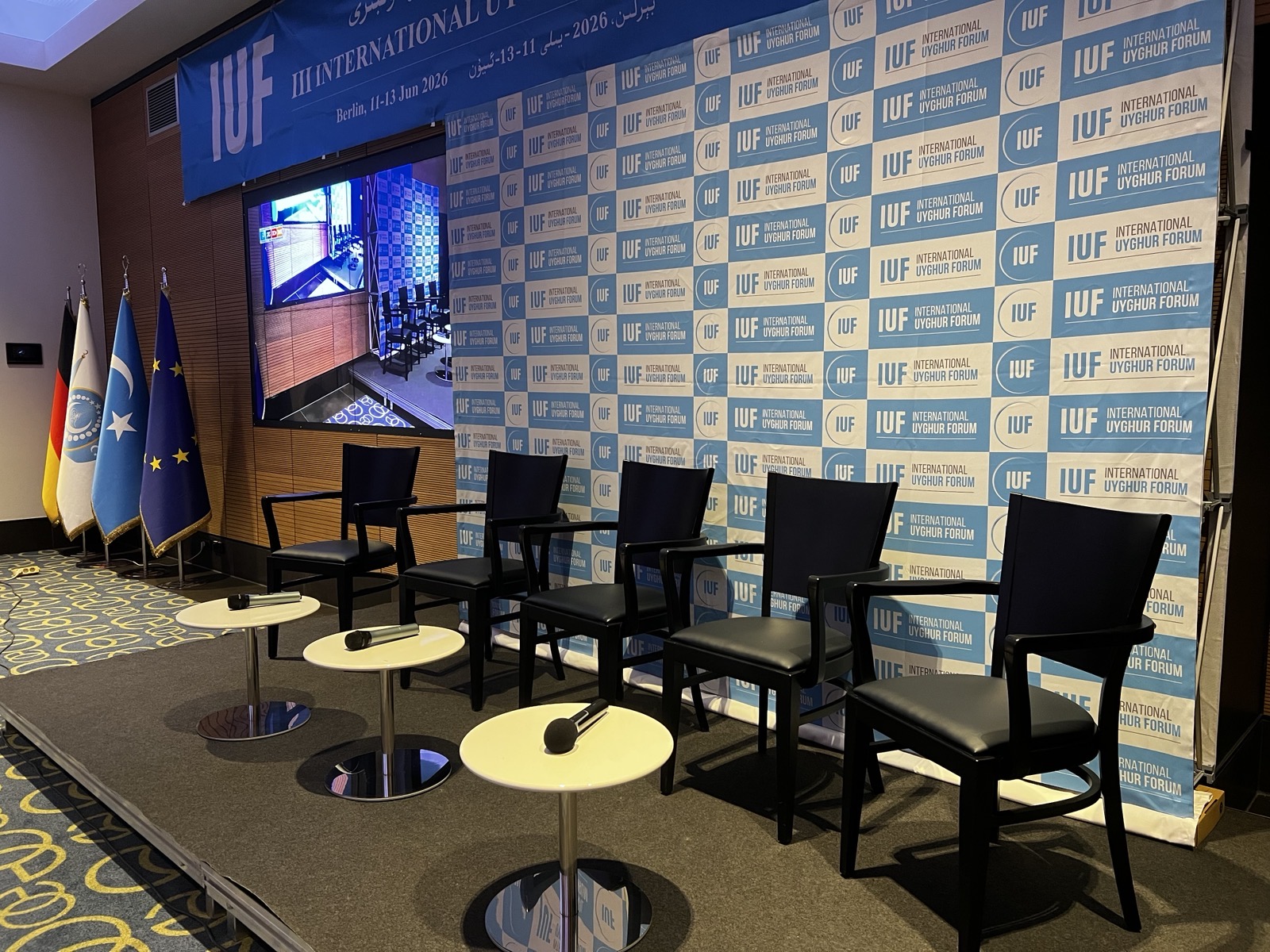
The Uyghur Transitional Justice Database (UTJD) participated in the third International Uyghur Forum, held in Berlin from 11–13 June 2026. The forum was organized by the World Uyghur Congress (WUC) in cooperation with the Uyghur Center for Democracy and Human Rights and brought together researchers, advocates, policymakers, and civil society representatives to discuss current challenges facing Uyghurs and strategies for advancing human rights, accountability, and justice.
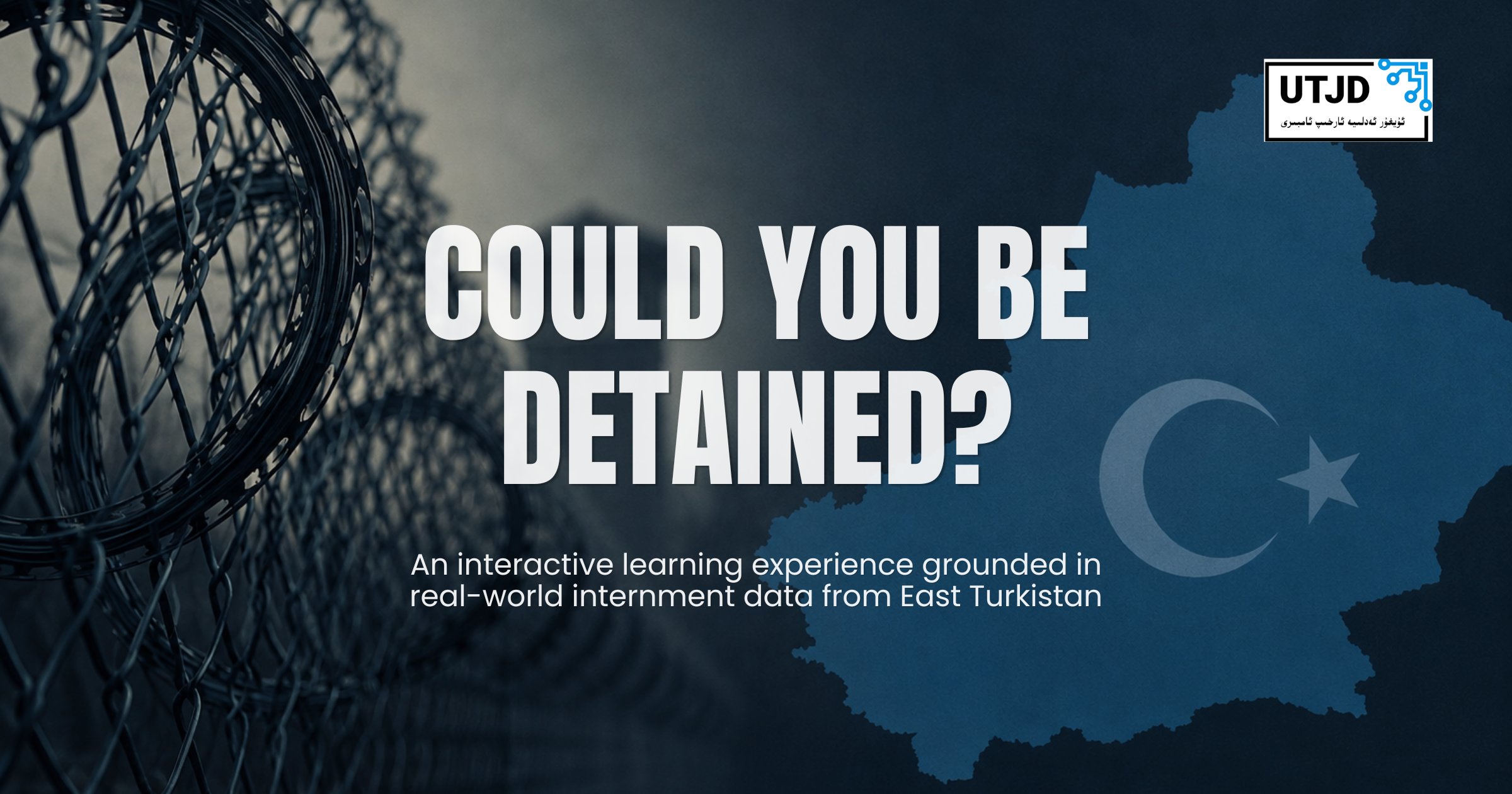
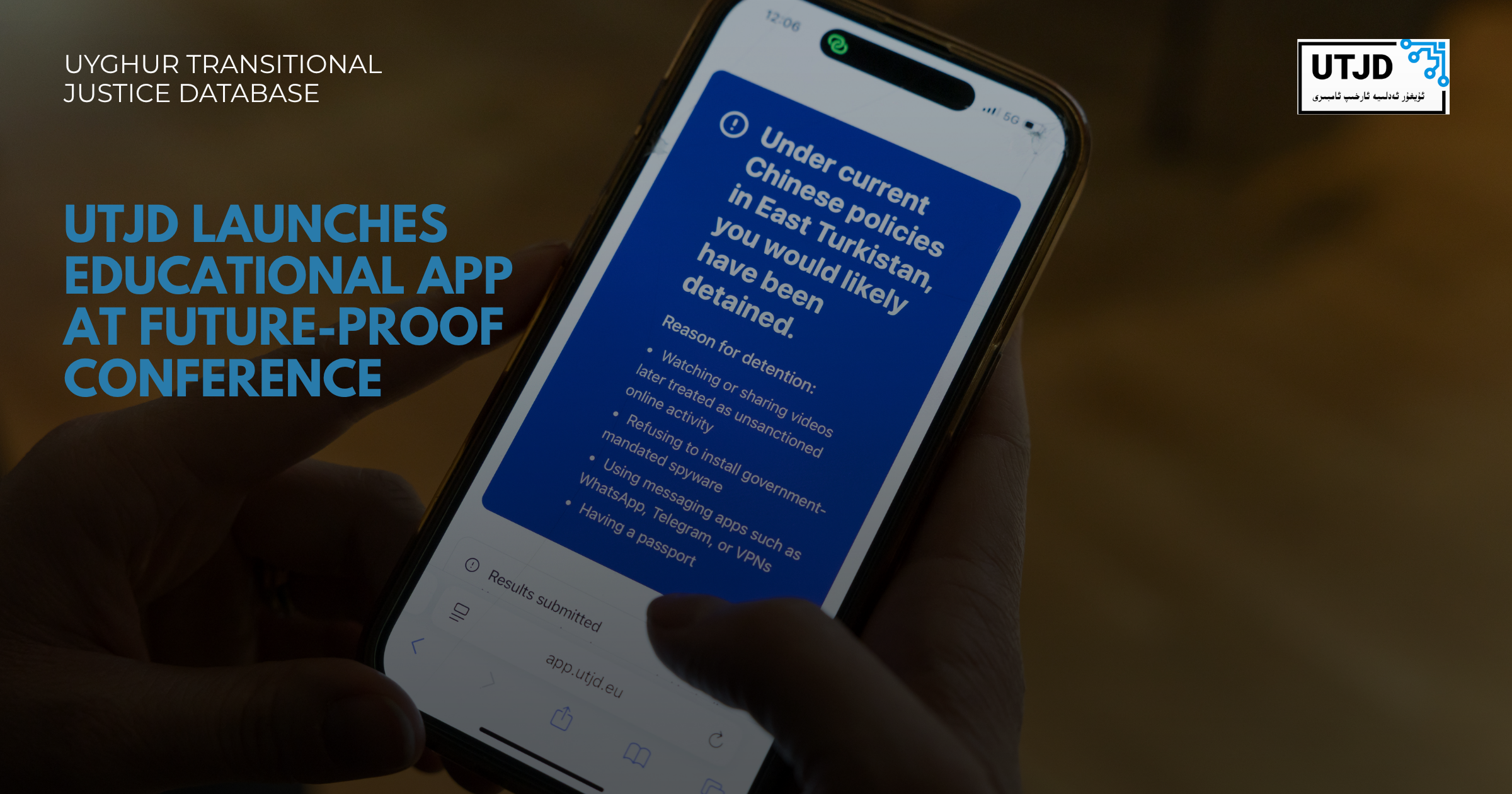
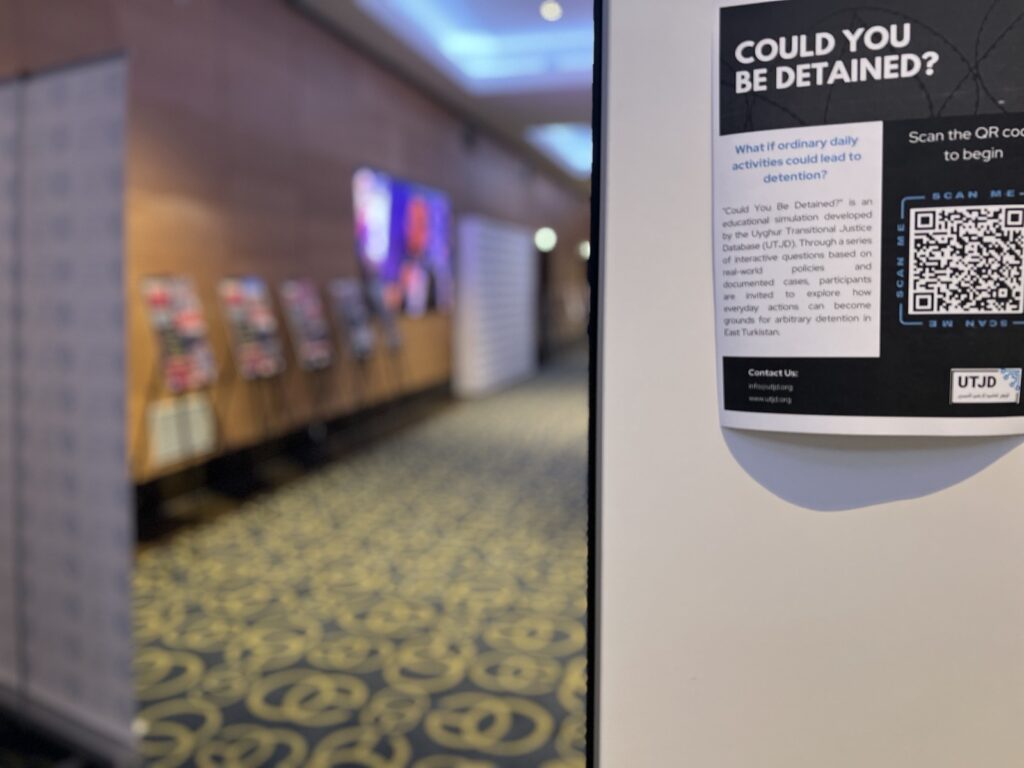
Adiljan Abdurihim, Coordinator and Data Technician at UTJD, delivered a presentation on how emerging technologies can strengthen the documentation, preservation, and exposure of human rights violations committed against Uyghurs and other Turkic peoples in East Turkistan. During the forum, he also introduced UTJD’s educational application, “Could You Be Detained?”, an interactive awareness tool designed to help participants better understand the realities of arbitrary detention and human rights violations in East Turkistan.
Panel Discussion: From Surveillance to Criminalization — Attacks on Religious Freedom
Adiljan Abdurihim also participated in the panel discussion titled “From Surveillance to Criminalization — Attacks on Religious Freedom.” moderated by Dena Shayne-Leeder, Esq., Assistant Director of the Jacob Blaustein Institute for the Advancement of Human Rights. He joined Abdulhakim Idris, Executive Director of the Center for Uyghur Studies, and Mia Hasenson-Gross, Executive Director of René Cassin to discuss the systematic restrictions on freedom of religion or belief faced by Uyghurs and explored the broader implications of these policies for international human rights protections.
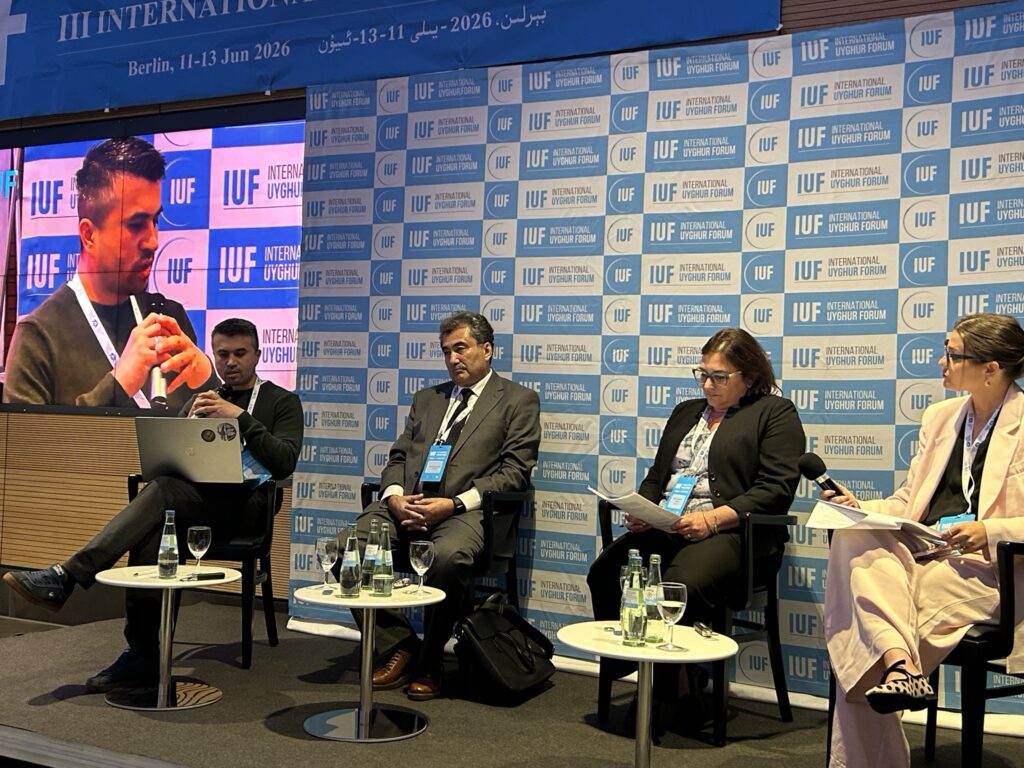
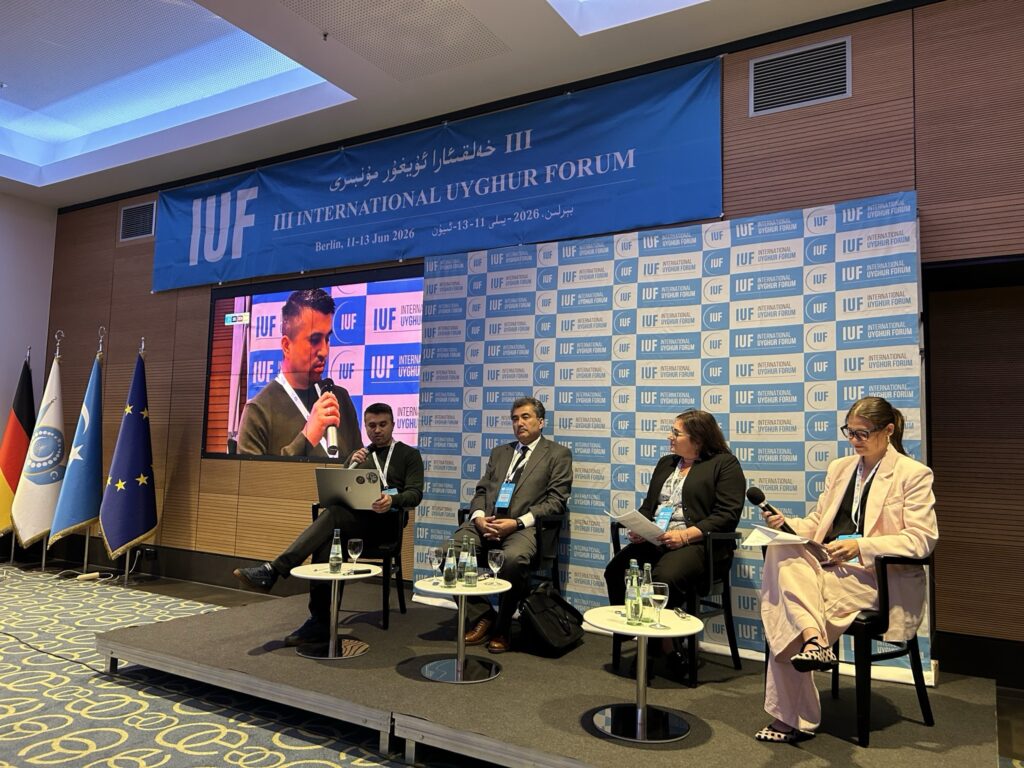
During his remarks, Adiljan highlighted research from an upcoming report examining the transformation of the historic Kériye Id Kah Mosque and the wider impact of surveillance and restrictions on religious freedom in East Turkistan.
He emphasized that the report builds upon extensive research already conducted by scholars, human rights organizations, investigative journalists, independent researchers, and Uyghur advocacy groups that have documented the destruction of religious sites, restrictions on worship, and broader patterns of repression. By combining these existing findings with new evidence and methodologies, the report seeks to provide an updated and comprehensive understanding of ongoing developments.
A key aspect of the research is its use of multiple forms of evidence. In addition to satellite imagery, historical records, and previously published research, the report incorporates observations from individuals who lived in and visited East Turkistan during 2024 and 2025. These accounts provide rare contemporary insights into conditions on the ground, describing heavily monitored religious sites, passport checks, restrictions on access and worship, and the transformation of some mosques into controlled tourist attractions.
Adiljan also outlined the role of innovative technologies in documenting and preserving cultural and religious heritage. Building on themes introduced during the Lightning Talk session, he explained how UTJD has been utilizing 3D modeling and virtual reality technologies to reconstruct internment camps, religious sites, and surrounding communities. These digital reconstructions help preserve historical memory, visualize changes over time, and communicate the scale of destruction in ways that traditional reports, maps, and photographs often cannot. They also provide an important means of documenting locations that are increasingly difficult to access independently.
He further emphasized that protecting freedom of religion or belief requires more than condemning acts of violence. It requires addressing the quieter systems of control that undermine religious life, including surveillance, administrative restrictions, cultural erasure, and the criminalization of ordinary religious practices.
UTJD remains committed to advancing innovative approaches to documentation, and research, while supporting efforts to preserve evidence, protect historical memory, and promote accountability for human rights violations committed against Uyghurs and other Turkic peoples in East Turkistan.